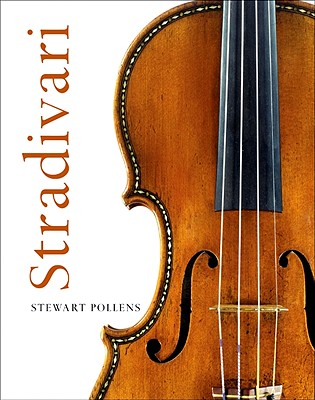
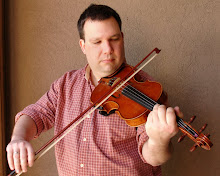
National Public Radio ran a great story on January 2 about a recent study on the conventional wisdom regarding old and historical violins. The results were fascinating. Old violins are treasured as great art of historical value, as they should, but otherwise they are just that: historical artifacts. Their value derives from their historical importance and rarity, not because the sound that can be produced when using them is unmatched in quality by newer instruments. Some sound great, many don't and all are different. The same goes for new violins, too.
Remember, Stradivari's violins were new once, too.
You can listen to it here.
1.03.2012
Recommended Books on Violin Making
![]() |
I compiled a selection of books that are available on Amazon.com that are terrific, reasonably priced resources for anyone wishing to know more about violins. They represent both the latest and seminal works on violin making. There are also many large format volumes that include full size photographs and drawings that are available elsewhere. Two sources for these books are Amati Books and Howard Core. |
5.17.2011
Restoration of Violin by Johann Glier -1765
One of my customers collects violins of the Glier family of makers from Markneukirchen and Cincinnati. The most well known is Robert Glier who immigrated to Cincinnati from Germany in the mid-19th century. This violin was made in 1765 by Johann Gottfried Glier.
This violin had extensive woodworm damage to the spruce top that had been previously repaired using wood putty. The bass bar was too large and poorly shaped. There was a crack on the treble side of the back near the soundpost.
The following repairs were made to this violin:
- Repair crack on back.
- Removal of loose wood putty used to fill woodworm holes in the belly.
- Fill cavities in the belly with Abatron Liquid Wood, a highly technical epoxy mainly used in historic architectural applications. This is far less invasive than the traditional removal of wood to place large chest patches. The epoxy has the same flexure as the original wood and pigments can be added to match the wood color. This is not a product found at the corner DYI store! This procedure is outlined in "Less-invasive Repair of Worm Tracks" by Andrew Ryan in the newly published 3 volume conservation manual by IPCA-Canada, "The Conservation, Restoration, and Repair of Stringed Instruments and Their Bows."
- Re-graduate the bass bar to achieve standard measurements and tuning nodes for the belly plate.
- Restore the edges of the belly.
- Restore missing one corner and purfling in several places.
- Patch the belly with new wood at the blocks to restore a stable gluing surface.
- Glue and cleat 5 cracks in the belly.
- Add maple sound post veneer (not a patch) on the belly.
- Touch up the varnish once repairs are completed. Match any new wood to the existing varnish.
- Bush the A-string peg.
- Complete set-up including planing fingerboard, new soundpost and new bridge.
When I delivered it to the owner, he told me it sounds better than ever and he will play it in his next concert with the Alabama Symphony Orchestra, performing Beethoven's 9th Symphony.
![]() |
| Belly before restoration |
![]() |
| Belly interior before restoration |
- Repair crack on back.
- Removal of loose wood putty used to fill woodworm holes in the belly.
- Fill cavities in the belly with Abatron Liquid Wood, a highly technical epoxy mainly used in historic architectural applications. This is far less invasive than the traditional removal of wood to place large chest patches. The epoxy has the same flexure as the original wood and pigments can be added to match the wood color. This is not a product found at the corner DYI store! This procedure is outlined in "Less-invasive Repair of Worm Tracks" by Andrew Ryan in the newly published 3 volume conservation manual by IPCA-Canada, "The Conservation, Restoration, and Repair of Stringed Instruments and Their Bows."
- Re-graduate the bass bar to achieve standard measurements and tuning nodes for the belly plate.
- Restore the edges of the belly.
- Restore missing one corner and purfling in several places.
- Patch the belly with new wood at the blocks to restore a stable gluing surface.
- Glue and cleat 5 cracks in the belly.
- Add maple sound post veneer (not a patch) on the belly.
- Touch up the varnish once repairs are completed. Match any new wood to the existing varnish.
- Bush the A-string peg.
- Complete set-up including planing fingerboard, new soundpost and new bridge.
![]() |
| Belly in aluminum frame with woodworm cavities |
![]() |
| Epoxy filler added to wood |
![]() |
| Back after Restoration |
![]() |
| Front after Restoration |
When I delivered it to the owner, he told me it sounds better than ever and he will play it in his next concert with the Alabama Symphony Orchestra, performing Beethoven's 9th Symphony.
2.28.2011
SCROLLWORKS
National Public Radio (NPR) featured Scrollwoks, a music education program in Birmingham, AL on the news program, Weekend Edition for February 27. The story is an excerpt from the series, "State of the RE:Union." Scrollworks provides music lessons to children of all income groups. The cost of the lessons is based on a sliding scale according to family income, and are often free. In a city like Birmingham, sometimes called "the most segregated city in America," the lessons bring kids from all backgrounds together with one goal; to make music.
I play a small role in Scrollworks by maintaining and repairing the program's stringed instruments, mostly donated, on a volunteer basis. I set up shop at the church where the lessons are held each Saturday. More often than not, kids come down with a small problem identified by the instructors during a lesson. Many times I can fix the problem while the student watches. I treat them as I would any customer, whether or not the student owns the instrument. In addition, they get to see first hand what goes into caring for the instrument.
Later in the spring, a full-length segment featuring the program will air on State of the RE:Union. In the meantime, enjoy this 10 minute segment about some great kids and the dedicated volunteer teachers and parents who participate in this worthwhile project. There is also a link to Scrollworks on my links where donations are accepted online, if you are so moved.
I play a small role in Scrollworks by maintaining and repairing the program's stringed instruments, mostly donated, on a volunteer basis. I set up shop at the church where the lessons are held each Saturday. More often than not, kids come down with a small problem identified by the instructors during a lesson. Many times I can fix the problem while the student watches. I treat them as I would any customer, whether or not the student owns the instrument. In addition, they get to see first hand what goes into caring for the instrument.
Later in the spring, a full-length segment featuring the program will air on State of the RE:Union. In the meantime, enjoy this 10 minute segment about some great kids and the dedicated volunteer teachers and parents who participate in this worthwhile project. There is also a link to Scrollworks on my links where donations are accepted online, if you are so moved.
![]() |
| Click HERE to see the see and hear the story |
2.19.2011
My Violin Making Studio
I have two studios in my shop. My front studio is where I work on restorations, touch-ups, adjustments and other tasks that don't require a workbench or make a mess. I also work with clients here. They can relax and chat while I perform adjustments or make consultations. I love the light in this space and the acoustics are excellent. Behind the desk are two display cabinets for instruments and accessories
I keep all my power tools in the basement. I have a table saw, band saw, drill press, oscillating sander, disk sander and several grinders, including a Tormek. I mainly use these to make tools and jigs. The bandsaw is the only power tool I use for actually making my violins. I keep the power tools in the basement for the room and mess, but also I feel that having them in the main studio gives my customers the wrong impression about what I do, since they are mostly used for general woodworking, plus they make a mess and are noisy.
I believe there is a certain amount of theatre in every profession's workspace. Customers feel more comfortable when the studio looks what they imagine a violin maker's workshop is "supposed" to look like. It gives them a clue that I know what I am doing. I also believe that my own pyche is influenced by the feel of the space in the same way, affecting my work for the better. My used to be an architect, so I like the idea of the studio resembling an architect's workspace.
![]() |
| The Front Room |
![]() |
| The Front Studio |
The back room studio is used mainly for making and messier tasks that create a lot of shavings. The benches are made from solid core doors (they weigh about 150 lbs each)bolted to the wall and supported by wood cabinets (they don't wobble). I added a 10cm poplar apron and 2 vises- a maple front vise (I'm left handed) and an aluminum Swiss Vise (love it!). An old chest of drawers holds large tools and vises.
![]() |
| My Back Violin Making Studio |
I keep all my power tools in the basement. I have a table saw, band saw, drill press, oscillating sander, disk sander and several grinders, including a Tormek. I mainly use these to make tools and jigs. The bandsaw is the only power tool I use for actually making my violins. I keep the power tools in the basement for the room and mess, but also I feel that having them in the main studio gives my customers the wrong impression about what I do, since they are mostly used for general woodworking, plus they make a mess and are noisy.
I believe there is a certain amount of theatre in every profession's workspace. Customers feel more comfortable when the studio looks what they imagine a violin maker's workshop is "supposed" to look like. It gives them a clue that I know what I am doing. I also believe that my own pyche is influenced by the feel of the space in the same way, affecting my work for the better. My used to be an architect, so I like the idea of the studio resembling an architect's workspace.
![]() |
| Violin Making Museum - Mittenwald, Germany |
2.17.2011
2.16.2011
Subscribe to:
Posts (Atom)